


Sacraments
Infant | NIÑO/a
|
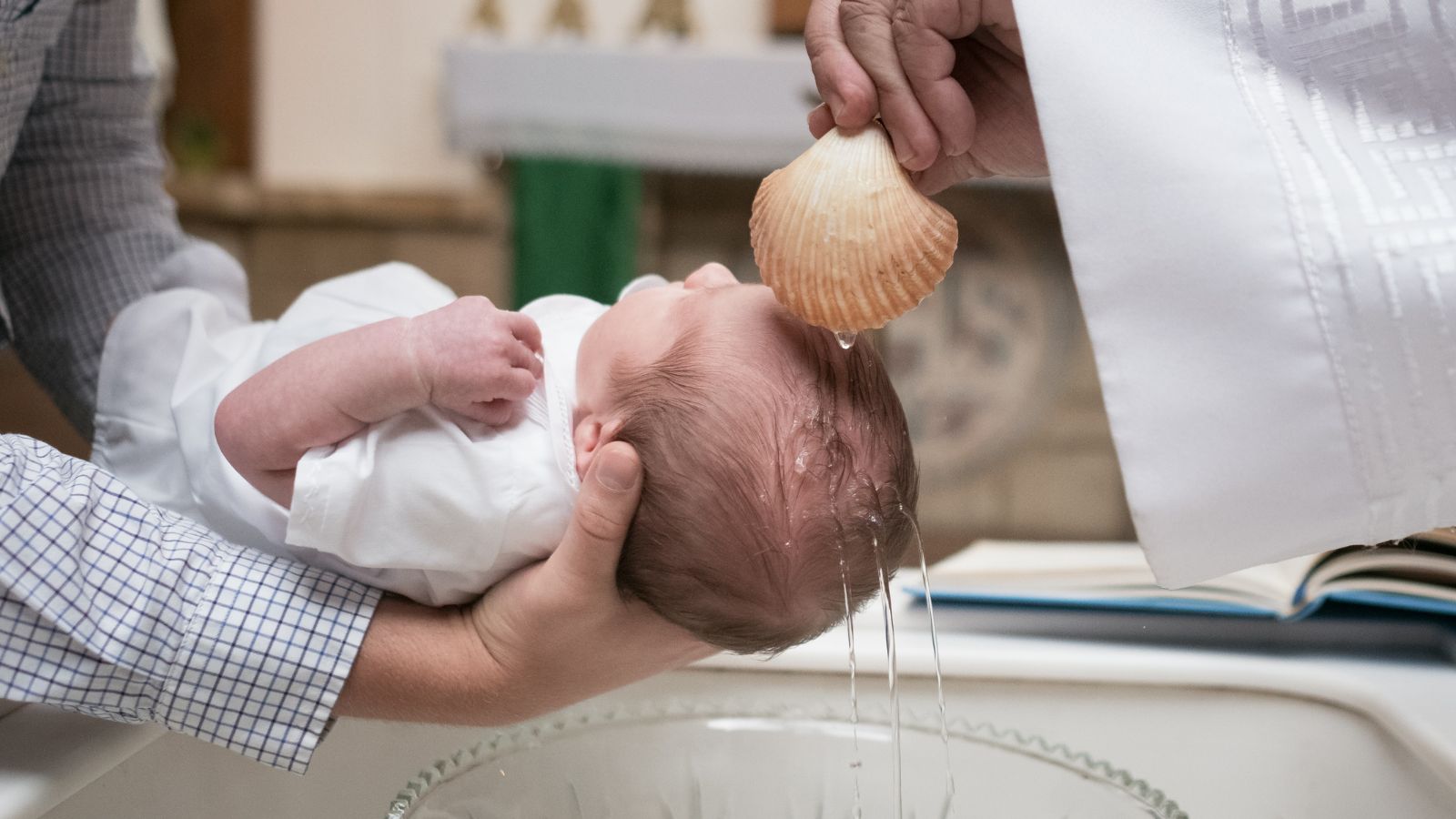
Baptisms will be held the Second Saturday of each month at 12:00 pm. in English and the Fourth Saturday of each month at 12:00 p.m. in Spanish. Parents must contact the Rectory to make arrangements. A preparation meeting for this Sacrament will take place the week prior to the Baptism. School age children (kindergarten and up) seeking to be Baptized must take part in a special program. Please contact the Rectory regarding this program. In his dialogue with Nicodemus, Jesus taught that Baptism was necessary for salvation. "No one can enter the kingdom of God without being born of water and Spirit" (Jn 3:5). After his Resurrection, Jesus met with the eleven Apostles and gave them the commission to preach the Gospel and baptize, telling them, "Whoever believes and is baptized will be saved" (Mk 16:16). The word baptism in its origins is Greek and means "immersion" and "bath." Immersion in water is a sign of death and emersion out of the water means new life. To bathe in water is also to undergo cleansing. Saint Paul sums up this truth when he says, "You were buried with him in baptism, in which you were also raised with him through faith in the power of God, who raised him from the dead" (Col 2:12). The origin and foundation of Christian Baptism is Jesus. Before starting his public ministry, Jesus submitted himself to the baptism given by John the Baptist. The waters did not purify him; he cleansed the waters. "He comes to sanctify the Jordan for our sake . . . to begin a new creation through the Spirit and water" (St. Gregory Nazianzen, Liturgy of the Hours, I, 634). Jesus' immersion in the water is a sign for all human beings of the need to die to themselves to do God's will. Jesus did not need to be baptized because he was totally faithful to the will of his Father and free from sin. However, he wanted to show his solidarity with human beings in order to reconcile them to the Father. By commanding his disciples to baptize all nations, he established the means by which people would die to sin—Original and actual—and begin to live a new life with God. (USCCB) |
Los bautismos se llevarán a cabo el segundo sábado de cada mes a las 12:00 pm. en inglés y el cuarto sábado de cada mes a las 12:00 p. m. en español. Los padres deben comunicarse con la Rectoría para hacer arreglos. Una semana antes del Bautismo se llevará a cabo una reunión de preparación para este Sacramento. Los niños en edad escolar (de kindergarten en adelante) que deseen bautizarse deben participar en un programa especial. Comuníquese con la Rectoría con respecto a este programa. En su diálogo con Nicodemo, Jesús enseñó que el bautismo era necesario para la salvación. "Nadie puede entrar en el reino de Dios sin haber nacido de agua y del Espíritu" (Jn 3, 5). Después de su Resurrección, Jesús se reunió con los once Apóstoles y les dio el encargo de predicar el Evangelio y bautizar, diciéndoles: "El que creyere y fuere bautizado, se salvará" (Mc 16,16). La palabra bautismo en su origen es griego y significa "inmersión" y "baño". La inmersión en el agua es señal de muerte y la emersión fuera del agua significa nueva vida. Bañarse en agua es también someterse a limpieza. San Pablo resume esta verdad cuando dice: "Fuisteis sepultados con él en el bautismo, en el cual también habéis resucitado con él por la fe en el poder de Dios, que le resucitó de los muertos" (Col 2, 12). El origen y fundamento del bautismo cristiano es Jesús. Antes de iniciar su ministerio público, Jesús se sometió al bautismo de Juan el Bautista. Las aguas no lo purificaron; limpió las aguas. "Él viene a santificar el Jordán por nosotros... para comenzar una nueva creación a través del Espíritu y del agua" (San Gregorio Nacianceno, Liturgia de las Horas, I, 634). La inmersión de Jesús en el agua es un signo para todos los seres humanos de la necesidad de morir a sí mismos para hacer la voluntad de Dios. Jesús no necesitaba ser bautizado porque era totalmente fiel a la voluntad de su Padre y libre de pecado. Sin embargo, quiso mostrar su solidaridad con los seres humanos para reconciliarlos con el Padre. Al ordenar a sus discípulos que bautizaran a todas las naciones, estableció los medios por los cuales la gente moriría al pecado —original y actual— y comenzaría a vivir una nueva vida con Dios. (USCCB) |
Adult | Adulto/a
|
In his dialogue with Nicodemus, Jesus taught that Baptism was necessary for salvation. "No one can enter the kingdom of God without being born of water and Spirit" (Jn 3:5). After his Resurrection, Jesus met with the eleven Apostles and gave them the commission to preach the Gospel and baptize, telling them, "Whoever believes and is baptized will be saved" (Mk 16:16). The word baptism in its origins is Greek and means "immersion" and "bath." Immersion in water is a sign of death and emersion out of the water means new life. To bathe in water is also to undergo cleansing. Saint Paul sums up this truth when he says, "You were buried with him in baptism, in which you were also raised with him through faith in the power of God, who raised him from the dead" (Col 2:12). The origin and foundation of Christian Baptism is Jesus. Before starting his public ministry, Jesus submitted himself to the baptism given by John the Baptist. The waters did not purify him; he cleansed the waters. "He comes to sanctify the Jordan for our sake . . . to begin a new creation through the Spirit and water" (St. Gregory Nazianzen, Liturgy of the Hours, I, 634). Jesus' immersion in the water is a sign for all human beings of the need to die to themselves to do God's will. Jesus did not need to be baptized because he was totally faithful to the will of his Father and free from sin. However, he wanted to show his solidarity with human beings in order to reconcile them to the Father. By commanding his disciples to baptize all nations, he established the means by which people would die to sin—Original and actual—and begin to live a new life with God. (USCCB) |
En su diálogo con Nicodemo, Jesús enseñó que el bautismo era necesario para la salvación. "Nadie puede entrar en el reino de Dios sin haber nacido de agua y del Espíritu" (Jn 3, 5). Después de su Resurrección, Jesús se reunió con los once Apóstoles y les dio el encargo de predicar el Evangelio y bautizar, diciéndoles: "El que creyere y fuere bautizado, se salvará" (Mc 16,16). La palabra bautismo en su origen es griego y significa "inmersión" y "baño". La inmersión en el agua es señal de muerte y la emersión fuera del agua significa nueva vida. Bañarse en agua es también someterse a limpieza. San Pablo resume esta verdad cuando dice: "Fuisteis sepultados con él en el bautismo, en el cual también habéis resucitado con él por la fe en el poder de Dios, que le resucitó de los muertos" (Col 2, 12). El origen y fundamento del bautismo cristiano es Jesús. Antes de iniciar su ministerio público, Jesús se sometió al bautismo de Juan el Bautista. Las aguas no lo purificaron; limpió las aguas. "Él viene a santificar el Jordán por nosotros... para comenzar una nueva creación a través del Espíritu y del agua" (San Gregorio Nacianceno, Liturgia de las Horas, I, 634). La inmersión de Jesús en el agua es un signo para todos los seres humanos de la necesidad de morir a sí mismos para hacer la voluntad de Dios. Jesús no necesitaba ser bautizado porque era totalmente fiel a la voluntad de su Padre y libre de pecado. Sin embargo, quiso mostrar su solidaridad con los seres humanos para reconciliarlos con el Padre. Al ordenar a sus discípulos que bautizaran a todas las naciones, estableció los medios por los cuales la gente moriría al pecado —original y actual— y comenzaría a vivir una nueva vida con Dios. (USCCB) |
|
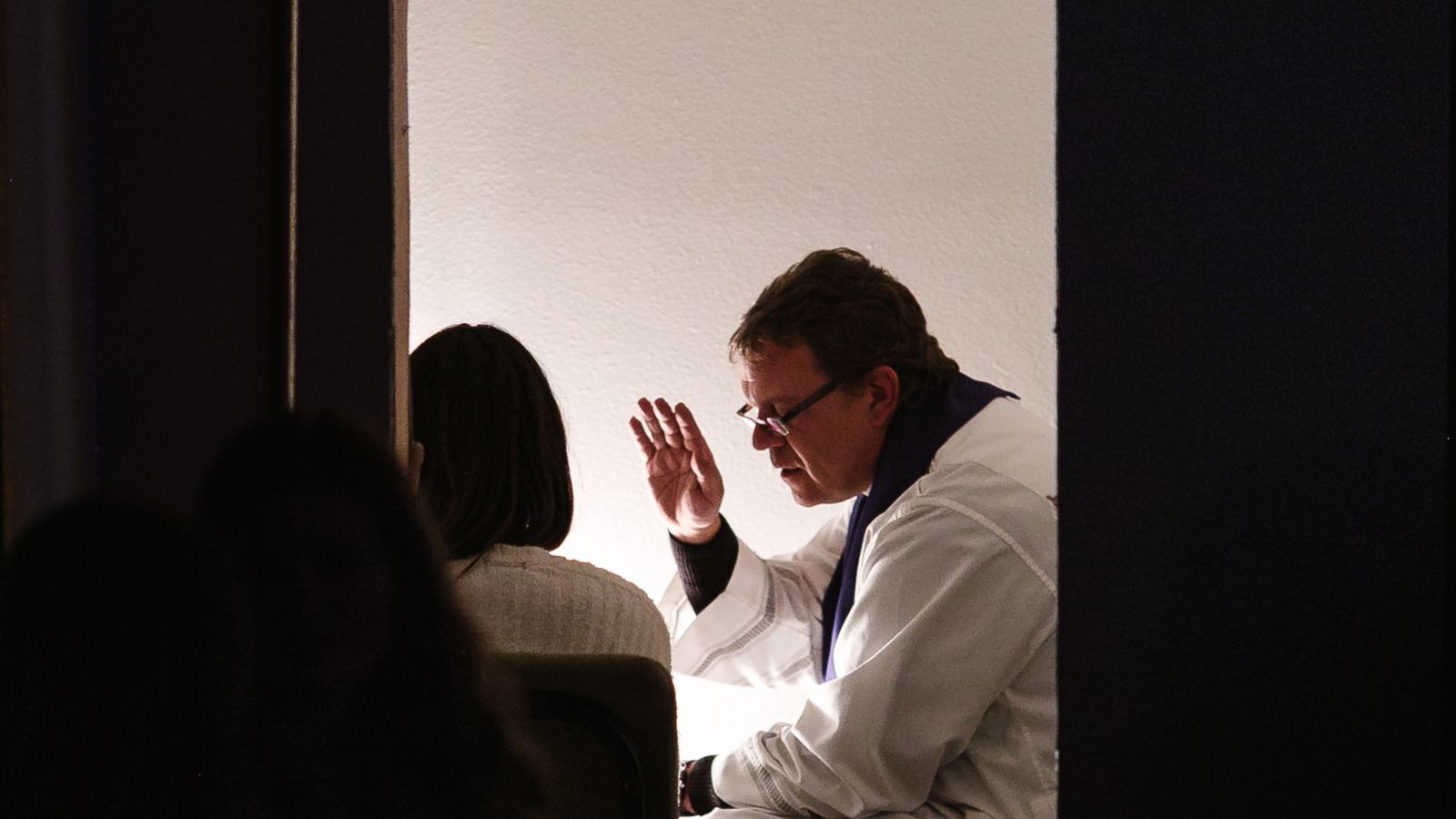
Saturdays 3:30 p.m. - 4:30 p.m.; or by appointment with a parish priest. What is Confession?Confession is a sacrament instituted by Jesus Christ in his love and mercy. It is here that we meet the loving Jesus who offers sinners forgiveness for offenses committed against God and neighbor. At the same time, Confession permits sinners to reconcile with the Church, which also is wounded by our sins. The sacrament, as the Catechism of the Catholic Church notes, is known by many names. Sometimes "it is called the sacrament of conversion because it makes sacramentally present Jesus' call to conversion" (1423). But it is also better known as "the sacrament of Penance, since it consecrates the Christian sinner's personal and ecclesial steps of conversion, penance, and satisfaction" (1423). For many of us it still continues to be known as "the sacrament of confession, since the disclosure or confession of sins to a priest is an essential element of this sacrament" (1424). At the same time, the Catechism reminds us that "it is called the sacrament of forgiveness, since by the priest's sacramental absolution God grants the penitent 'pardon and peace'" (1424). Finally, it is also called the sacrament of Reconciliation because it reconciles sinners to God and then to each other (1424). In this text, we will refer to the sacrament as the sacrament of Penance. Through this sacrament, we meet Christ in his Church ready and eager to absolve and restore us to new life. The graces of Christ are conferred in the sacraments by means of visible signs - signs that are acts of worship, symbols of the grace given and recognizable gestures through which the Lord bestows his gifts. In the sacrament of Penance, the forgiveness of sins and the restoration of grace are the gifts received through the outward sign, i.e., the extension of hands and words of absolution pronounced by the priest. Why is Confession necessary?We need the sacrament of Penance because each of us, from time to time, sins. When we recognize that we have offended God who is all deserving of our love, we sense the need to make things right. Like the prodigal son in the Gospel, we long to know again the loving embrace of a forgiving father who patiently waits for each of us. Jesus himself has established this sure and certain way for us to access God's mercy and to know that our sins are forgiven. By virtue of his divine authority, Jesus gives this power of absolution to the apostolic ministry. As the Catechism of the Catholic Church says, "in imparting to his apostles his own power to forgive sins the Lord also gives them the authority to reconcile sinners with the Church" (1444). We need to know that our sins are forgiven. There is something in our human nature that calls out for the assurance that our sins are actually forgiven. Confession is the visible manifestation of God's mercy that provides us, in human terms as well, the clear awareness that God has forgiven us. How often should I go to Confession?Individual and integral confession remains the only ordinary way for us to reconcile ourselves with God and the Church. A Catholic who has committed mortal (grave) sin is obliged to seek God's forgiveness in this sacrament as soon as possible. Our Continuing ConversionAs we complete these thoughts on the sacrament of Penance, we might well reflect that the deepest spiritual joy each of us can sense is the freedom from whatever would separate us from God, a loving and merciful Father who receives each of us with all the forgiveness and love lavished on the prodigal son. Renewed, refreshed and reconciled in this sacrament once more, we who have sinned become a "new creation." Once more we are made new. It is this newness of spirit and soul that we hope all of us experience time and again in the sacrament of Penance. |
Sábados 15:30 h. - 4:30 pm.; o por cita con un párroco. ¿Qué es la confesión?La confesión es un sacramento instituido por Jesucristo en su amor y misericordia. Es aquí donde nos encontramos con el amoroso Jesús que ofrece a los pecadores el perdón por las ofensas cometidas contra Dios y el prójimo. Al mismo tiempo, la Confesión permite a los pecadores reconciliarse con la Iglesia, que también está herida por nuestros pecados. El sacramento, como señala el Catecismo de la Iglesia Católica, es conocido por muchos nombres. A veces "se le llama sacramento de la conversión porque hace sacramentalmente presente el llamado de Jesús a la conversión" (1423). Pero también es más conocido como "el sacramento de la Penitencia, ya que consagra los pasos personales y eclesiales de conversión, penitencia y satisfacción del pecador cristiano" (1423). Para muchos de nosotros sigue siendo conocido como "el sacramento de la confesión, ya que la revelación o confesión de los pecados a un sacerdote es un elemento esencial de este sacramento" (1424). Al mismo tiempo, el Catecismo nos recuerda que "se llama sacramento del perdón, ya que con la absolución sacramental del sacerdote Dios concede al penitente 'perdón y paz'" (1424). Finalmente, también se le llama el sacramento de la Reconciliación porque reconcilia a los pecadores con Dios y luego entre sí (1424). En este texto, nos referiremos al sacramento como el sacramento de la Penitencia. A través de este sacramento, nos encontramos con Cristo en su Iglesia dispuesto y deseoso de absolvernos y restaurarnos a una vida nueva. Las gracias de Cristo se confieren en los sacramentos por medio de signos visibles, signos que son actos de culto, símbolos de la gracia dada y gestos reconocibles a través de los cuales el Señor otorga sus dones. En el sacramento de la Penitencia, el perdón de los pecados y la restauración de la gracia son los dones recibidos mediante el signo exterior, es decir, la extensión de las manos y las palabras de absolución pronunciadas por el sacerdote. ¿Por qué es necesaria la Confesión?Necesitamos el sacramento de la Penitencia porque cada uno de nosotros, de vez en cuando, peca. Cuando reconocemos que hemos ofendido a Dios, quien merece todo nuestro amor, sentimos la necesidad de hacer las cosas bien. Como el hijo pródigo del Evangelio, anhelamos volver a conocer el abrazo amoroso de un padre perdonador que espera pacientemente por cada uno de nosotros. Jesús mismo ha establecido este camino seguro y cierto para que podamos acceder a la misericordia de Dios y saber que nuestros pecados son perdonados. En virtud de su autoridad divina, Jesús da este poder de absolución al ministerio apostólico. Como dice el Catecismo de la Iglesia Católica, "al impartir a sus apóstoles su propio poder para perdonar los pecados, el Señor les da también la autoridad para reconciliar a los pecadores con la Iglesia" (1444). Necesitamos saber que nuestros pecados son perdonados. Hay algo en nuestra naturaleza humana que clama por la seguridad de que nuestros pecados son realmente perdonados. La confesión es la manifestación visible de la misericordia de Dios que nos proporciona, también humanamente, la clara conciencia de que Dios nos ha perdonado. ¿Con qué frecuencia debo confesarme?La confesión individual e integral sigue siendo el único camino ordinario para reconciliarnos con Dios y la Iglesia. Un católico que ha cometido un pecado mortal (grave) está obligado a buscar el perdón de Dios en este sacramento lo antes posible. Nuestra Conversión ContinuaAl completar estos pensamientos sobre el sacramento de la Penitencia, bien podemos reflexionar que el gozo espiritual más profundo que cada uno de nosotros puede sentir es la libertad de todo lo que nos separa de Dios, un Padre amoroso y misericordioso que nos recibe a cada uno con todo el perdón. y amor prodigado en el hijo pródigo. Renovados, refrescados y reconciliados en este sacramento una vez más, los que hemos pecado nos convertimos en una "nueva creación". Una vez más somos hechos nuevos. Es esta novedad de espíritu y alma que esperamos que todos experimentemos una y otra vez en el sacramento de la Penitencia. |
|
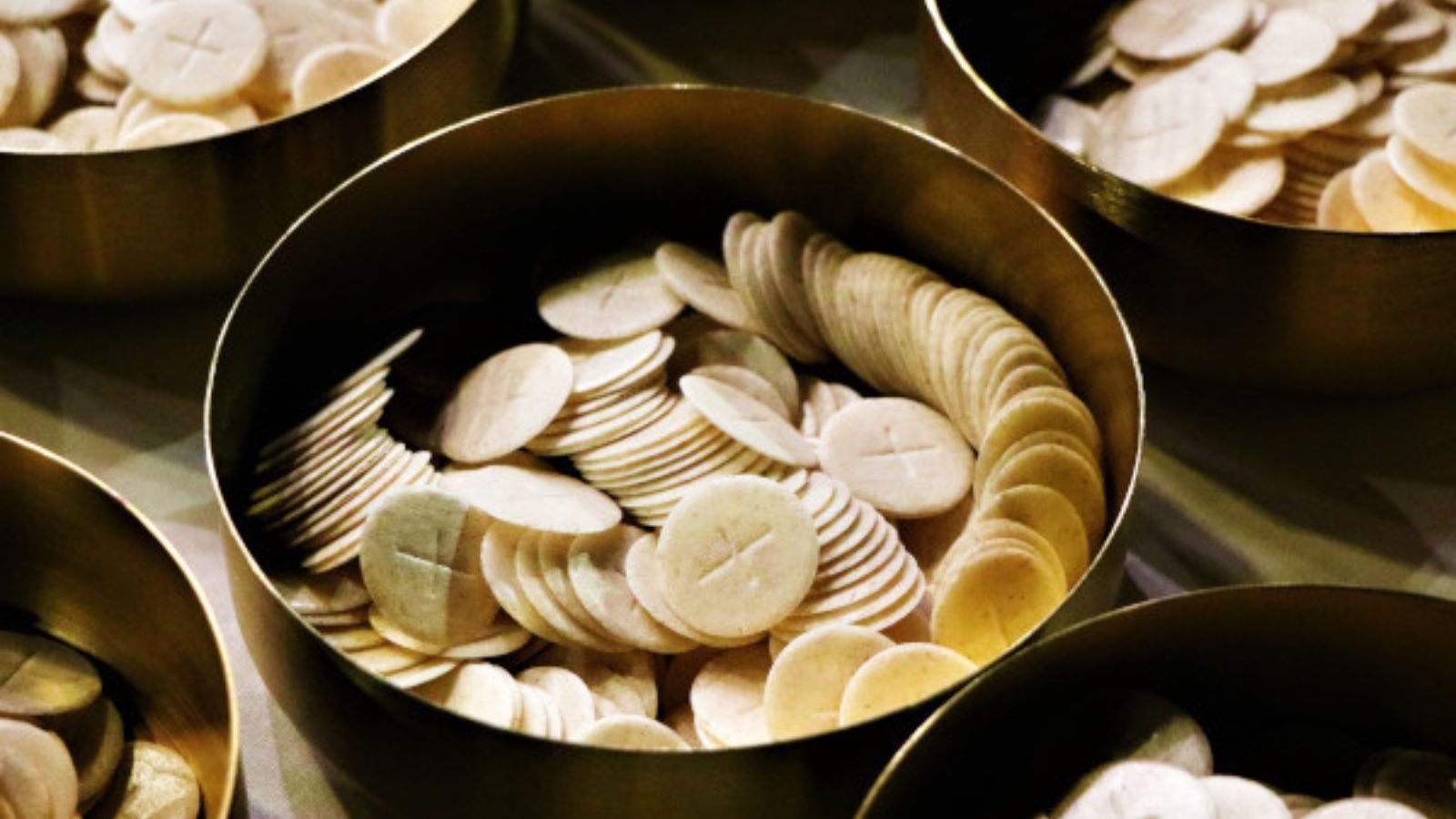
Saturday: 5:00pm (Vigil) Weekdays Holydays Rosary Adoration Eucharist for the Homebound |
Sábado: 5:00pm (Vigilia) Días de semana Vacaciones Rosario Adoración Eucaristía por los confinados en casa |
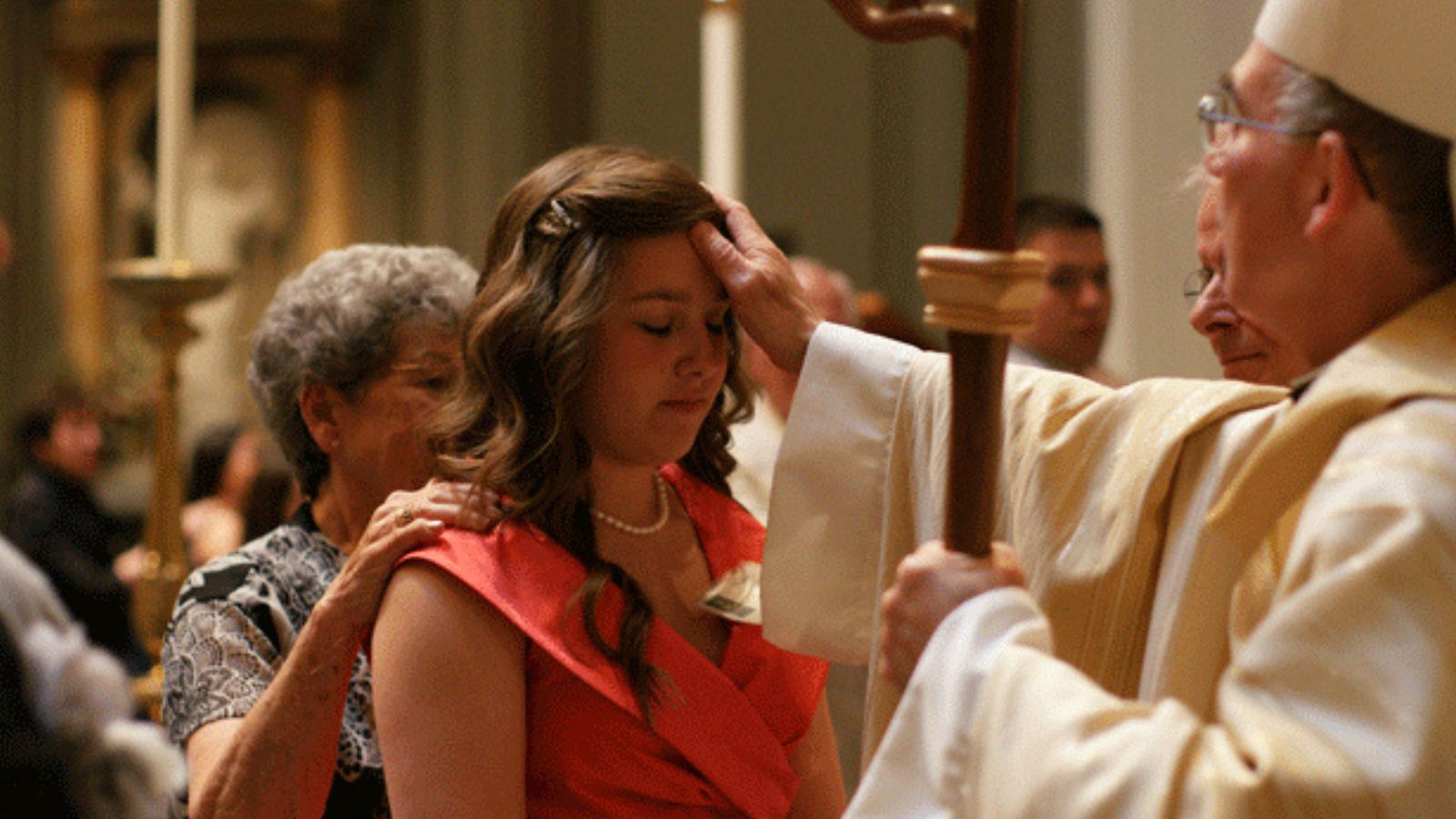
| Confirmation is the completion of baptism, the giving of the full power of a Christian. "Confirmation" means a strengthening -- this sacrament strengthens and increases what we receive at baptism, particularly the power of bearing witness to Christ. To emphasize this, the ceremony of confirmation includes a renewal of our baptismal promises. We now become full-fledged members of the Church, lay apostles in the fullest sense. Adults who are not confirmed can be confirmed when the Bishop comes or at the Easter Vigil. Please call the Church office if you need to be confirmed. | La confirmación es la culminación del bautismo, la entrega del pleno poder de un cristiano. "Confirmación" significa un fortalecimiento: este sacramento fortalece y aumenta lo que recibimos en el bautismo, particularmente el poder de dar testimonio de Cristo. Para enfatizar esto, la ceremonia de confirmación incluye una renovación de nuestras promesas bautismales. Ahora nos convertimos en miembros de pleno derecho de la Iglesia, apóstoles laicos en el sentido más completo. Los adultos que no están confirmados pueden ser confirmados cuando venga el Obispo o en la Vigilia Pascual. Por favor llame a la oficina de la Iglesia si necesita ser confirmado. |
|
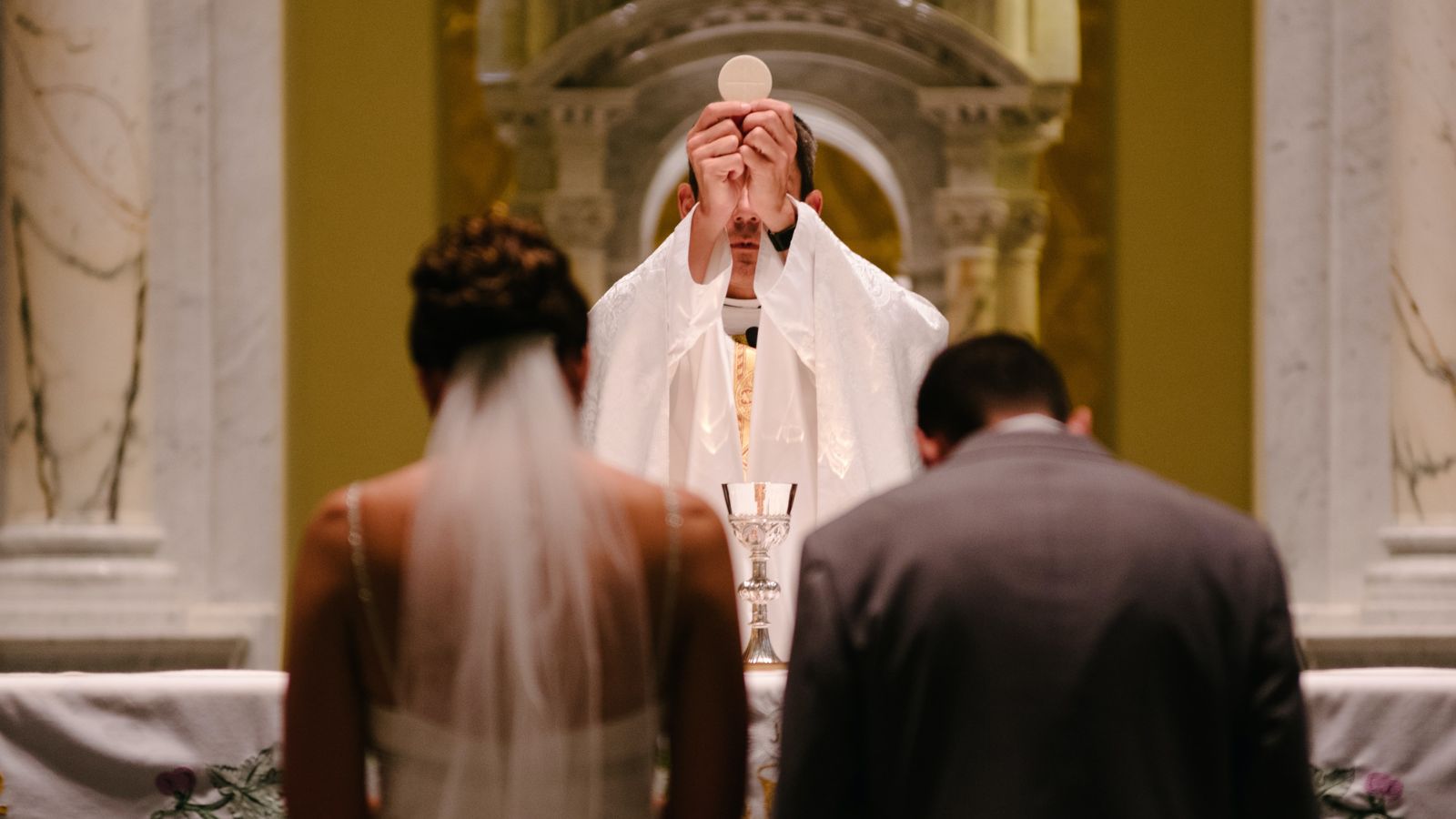
Couples should call the rectory for an appointment at least six (6) months prior to a proposed wedding date and before a date is finalized with a reception hall. Pre-Cana program is required for all couples in preparation for the Sacrament. Marriage: A Sacred & Supernatural Institution:At its most basic (natural) level, marriage is a union between a man and a woman for the purpose of procreation and mutual support, or love. However, in the Catholic Church marriage is more than a natural institution; it was elevated by Christ Himself, in His participation in the wedding at Cana (John 2:1-11), to be one of the seven sacraments. A marriage between two Christians, therefore, has a supernatural element as well as a natural one. While few Christians outside of the Catholic and Orthodox Churches regard marriage as a sacrament, the Catholic Church insists that marriage between any two baptized Christians, as long as it is entered into with the intention to contract a true marriage, is a sacrament. The Mark and Effect of the Sacrament:The spouses are the ministers of the sacrament of marriage because the mark—the external sign—of the sacrament is not the wedding Mass or anything the priest might do but the marriage contract itself. This does not mean the wedding license that the couple receives from the state, but the vows that each spouse makes to the other. As long as each spouse intends to contract a true marriage, the sacrament is performed. The effect of the sacrament is an increase in sanctifying grace for the spouses, a participation in the divine life of God Himself. The Union of Christ and His Church:This sanctifying grace helps each spouse to help the other advance in holiness, and it helps them together to cooperate in God's plan of redemption by raising up children in the Faith. In this way, sacramental marriage is more than a union of a man and a woman; it is, in fact, a type and symbol of the divine union between Christ, the Bridegroom, and His Church, the Bride. As married Christians, open to the creation of new life and committed to our mutual salvation, we participate not only in God's creative act but in the redemptive act of Christ. |
Las parejas deben llamar a la rectoría para programar una cita al menos seis (6) meses antes de la fecha propuesta para la boda y antes de que se finalice la fecha con un salón de recepción. El programa Pre-Caná es requerido para todas las parejas en preparación para el Sacramento. Matrimonio: Una Institución Sagrada y Sobrenatural:En su nivel más básico (natural), el matrimonio es una unión entre un hombre y una mujer con el propósito de la procreación y el apoyo mutuo, o el amor. Sin embargo, en la Iglesia Católica el matrimonio es más que una institución natural; fue elevado por Cristo mismo, en Su participación en las bodas de Caná (Juan 2:1-11), para ser uno de los siete sacramentos. Un matrimonio entre dos cristianos, por lo tanto, tiene un elemento sobrenatural tanto como natural. Si bien pocos cristianos fuera de las Iglesias católica y ortodoxa consideran el matrimonio como un sacramento, la Iglesia católica insiste en que el matrimonio entre dos cristianos bautizados, siempre que se celebre con la intención de contraer un verdadero matrimonio, es un sacramento. La marca y el efecto del sacramento:Los cónyuges son los ministros del sacramento del matrimonio porque la marca, el signo externo, del sacramento no es la Misa nupcial ni nada que pueda hacer el sacerdote, sino el contrato matrimonial mismo. Esto no significa la licencia de matrimonio que la pareja recibe del estado, sino los votos que cada cónyuge hace al otro. Mientras cada cónyuge tenga la intención de contraer un verdadero matrimonio, se realiza el sacramento. El efecto del sacramento es un aumento de la gracia santificante para los esposos, una participación en la vida divina del mismo Dios. La Unión de Cristo y Su Iglesia:Esta gracia santificante ayuda a cada cónyuge a ayudar al otro a avanzar en la santidad, y los ayuda a cooperar juntos en el plan de redención de Dios mediante la crianza de los hijos en la fe. De esta manera, el matrimonio sacramental es más que la unión de un hombre y una mujer; es, de hecho, tipo y símbolo de la unión divina entre Cristo, el Esposo, y su Iglesia, la Esposa. Como cristianos casados, abiertos a la creación de vida nueva y comprometidos con nuestra mutua salvación, participamos no sólo del acto creador de Dios, sino también del acto redentor de Cristo. |
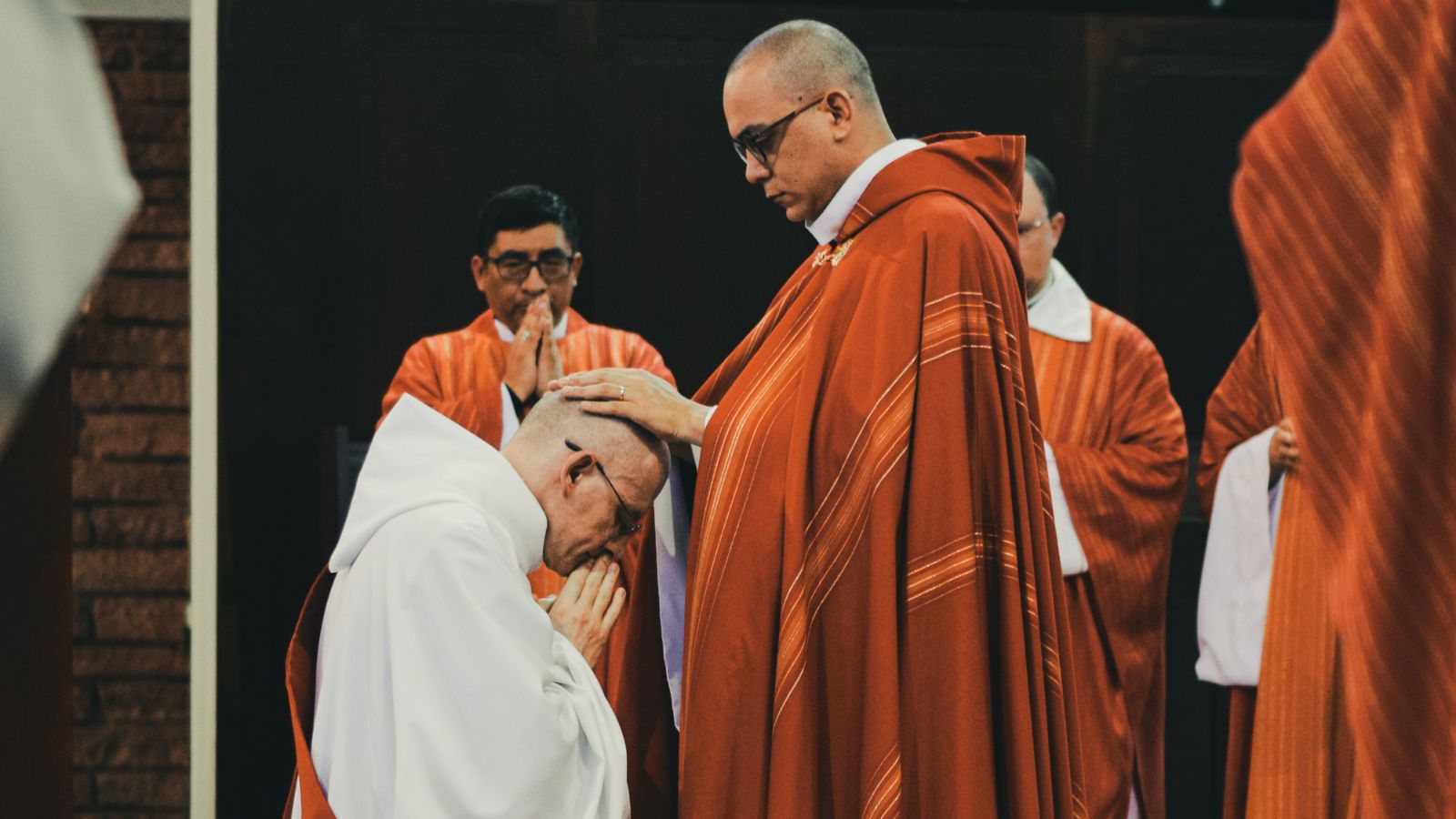
| Men become priests today as always -- by the sacrament of holy orders -- the laying on of the bishop's hands and prayer. Through this sacrament Christ changes the man interiorly, giving him the powers of the priesthood. There are different orders or degrees in the priesthood: a deacon, a priest, and a bishop. Priests and bishops are not married, although there are some priests who are ministers from another faith tradition who join the Catholic Church and want to serve as a priest. If you have any questions or interested in the priesthood please call the Church Office. | Los hombres se hacen sacerdotes hoy como siempre, por el sacramento del orden sagrado, la imposición de las manos del obispo y la oración. Por este sacramento Cristo cambia interiormente al hombre, dándole los poderes del sacerdocio. Hay diferentes órdenes o grados en el sacerdocio: un diácono, un presbítero y un obispo. Los sacerdotes y obispos no están casados, aunque hay algunos sacerdotes que son ministros de otra tradición religiosa que se unen a la Iglesia Católica y quieren servir como sacerdotes. Si tiene alguna pregunta o está interesado en el sacerdocio, llame a la Oficina de la Iglesia. |
|
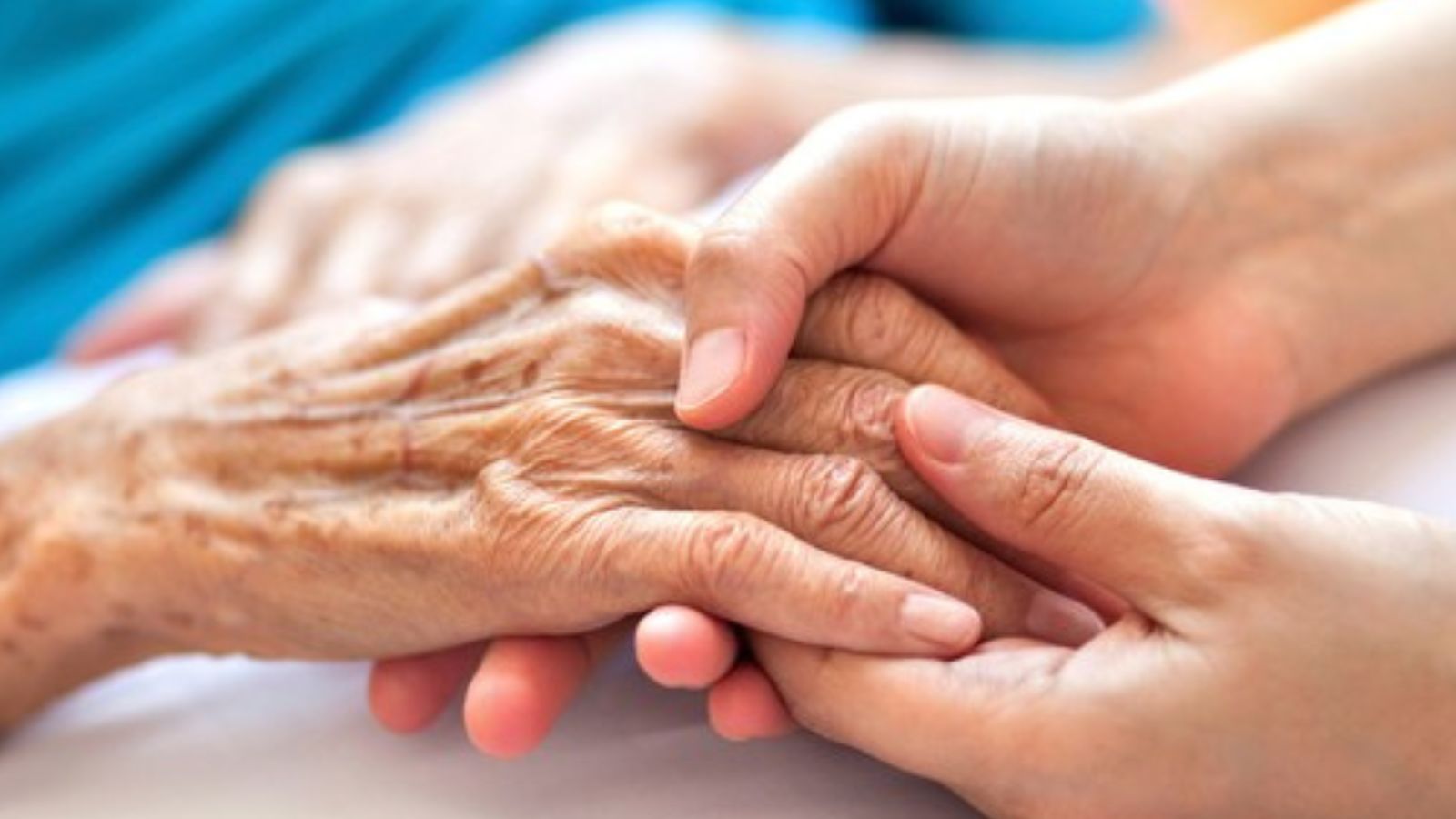
The Sacrament of Anointing is for those who are sick. Please call the Rectory if you wish to receive the Sacrament. Private reception by the homebound may be requested by calling the Rectory. The Rite of Anointing tells us there is no need to wait until a person is at the point of death to receive the Sacrament. A careful judgment about the serious nature of the illness is sufficient. The Sacrament may be repeated if the sick person recovers after the anointing but becomes ill once again, or if, during the same illness, the person's condition becomes more serious. A person should be anointed before surgery when a dangerous illness is the reason for the intervention (cf. Rite of Anointing, Introduction, nos. 8-10). Moreover, "old people may be anointed if they are in weak condition even though no dangerous illness is present. Sick children may be anointed if they have sufficient use of reason to be comforted by this sacrament. . . . [The faithful] should be encouraged to ask for the anointing, and, as soon as the time for the anointing comes, to receive it with faith and devotion, not misusing the sacrament by putting it off" (Rite of Anointing, nos. 11, 12, 13). Only bishops and priests may be ministers of the Sacrament of the Anointing of the Sick. A penitential rite followed by the Liturgy of the Word opens the celebration. Scripture awakens the faith of the sick and family members and friends to pray to Christ for the strength of his Holy Spirit. The priest lays his hands on the head of the sick person. He then proceeds to anoint, with the blessed Oil of the Sick, the forehead and hands of the sick person (in the Roman Rite). He accompanies these acts with the words, "Through this holy anointing may the Lord in his love and mercy help you with the grace of the Holy Spirit. May the Lord who frees you from sin save you and raise you up" (CCC, no. 1513). For those who are about to depart from this life, the Church offers the person Penance, Anointing of the Sick, and the Eucharist as Viaticum (food for the journey) given at the end of life. These are "the sacraments that prepare for our heavenly homeland" (cf. CCC, no. 1525). These rites are highly valued by Catholics as powerful aids to a good death. Since Holy Communion is the effective sign of Christ's Paschal Mystery, it becomes for the recipient the opportunity to unite one's own suffering and dying to that of Christ with the hope of life eternal with him. The special words proper to Viaticum are added: "May the Lord Jesus protect you and lead you to everlasting life. Amen." |
El Sacramento de la Unción es para los que están enfermos. Por favor llame a la Rectoría si desea recibir el Sacramento. La recepción privada por parte de los confinados en el hogar se puede solicitar llamando a la Rectoría. El Rito de la Unción nos dice que no hay necesidad de esperar hasta que una persona esté al borde de la muerte para recibir el Sacramento. Un juicio cuidadoso sobre la gravedad de la enfermedad es suficiente. El Sacramento puede repetirse si la persona enferma se recupera después de la unción pero vuelve a enfermar, o si, durante la misma enfermedad, la condición de la persona se vuelve más grave. Una persona debe ser ungida antes de la cirugía cuando el motivo de la intervención es una enfermedad peligrosa (cf. Rito de la Unción, Introducción, nn. 8-10). Además, "los ancianos pueden ser ungidos si están en condiciones débiles aunque no presenten ninguna enfermedad peligrosa. Los niños enfermos pueden ser ungidos si tienen suficiente uso de razón para ser consolados por este sacramento... [Los fieles] deben ser animados a pedir la unción y, tan pronto como llegue el momento de la unción, a recibirla con fe y devoción, no abusando del sacramento postergándolo» (Rito de la Unción, nn. 11, 12, 13). Sólo los obispos y los presbíteros pueden ser ministros del Sacramento de la Unción de los Enfermos. Un rito penitencial seguido de la Liturgia de la Palabra abre la celebración. La Escritura despierta la fe de los enfermos y familiares y amigos para orar a Cristo por la fuerza de su Espíritu Santo. El sacerdote pone sus manos sobre la cabeza del enfermo. Luego procede a ungir, con el Óleo bendito de los Enfermos, la frente y las manos del enfermo (en el Rito Romano). Acompaña estos actos con las palabras: "Por esta santa unción, el Señor, en su amor y misericordia, os ayude con la gracia del Espíritu Santo. El Señor, que os libre del pecado, os salve y os levante" (CIC, n. . 1513). Para aquellos que están a punto de partir de esta vida, la Iglesia ofrece a la persona la Penitencia, la Unción de los Enfermos y la Eucaristía como viático (alimento para el camino) dado al final de la vida. Estos son "los sacramentos que preparan a nuestra patria celestial" (cf. CIC, no. 1525). Estos ritos son muy valorados por los católicos como poderosas ayudas para una buena muerte. Siendo la Sagrada Comunión el signo eficaz del Misterio Pascual de Cristo, se convierte para quien la recibe en la oportunidad de unir el propio sufrimiento y muerte al de Cristo con la esperanza de la vida eterna con él. Se añaden las palabras especiales propias del Viático: "Que el Señor Jesús os proteja y os conduzca a la vida eterna. Amén". |